

Muhza is NOT Another Clean Beauty Brand
Alexia Coutts on building the first skincare brand that actually gets your hormones

Slutty Founder is a weekly newsletter by the girl you dream of meeting in the bathroom (for business advice). Today’s read is free.
Read to the end for a surprise 15% from today’s brand.

One of the perks of working with early stage founders is being let in on their brilliance before it hits gen-pop.
When Alexia connected with me around the time I shut down my own beauty brand last year, I was so impressed to learn about what she was building.
Women's health is a massive market opportunity, and the beauty founders paying attention are positioning their brands accordingly.
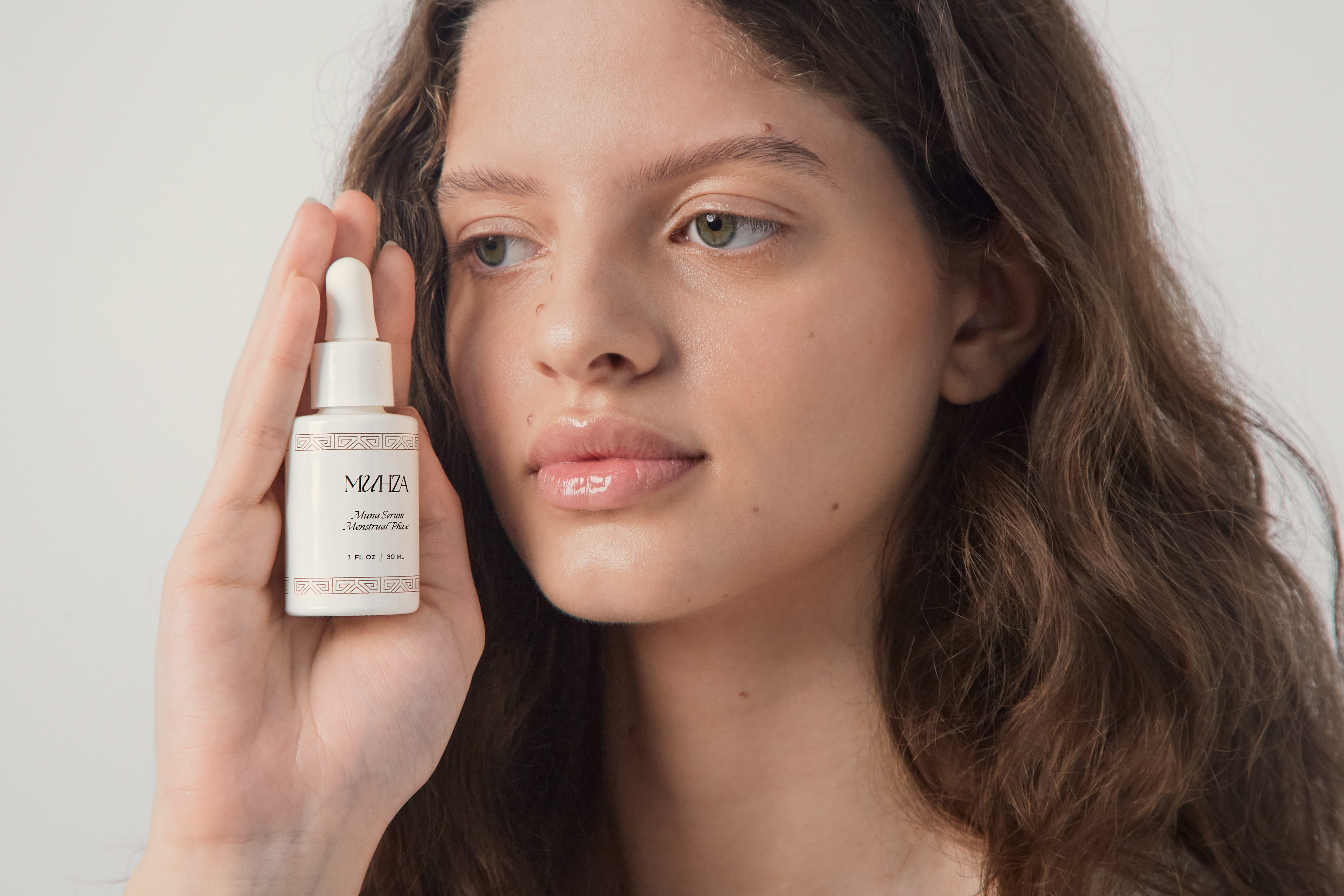
Muhza is doing something I've genuinely never seen in skincare (I'm calling it now that Alexia is going to be a real big star). It’s the first cycle-synced skincare line, with each product uniquely formulated to address your skin's specific needs during each phase of your menstrual cycle. It’s inspired by Alexia’s Peruvian roots and built on reconnecting with our body's natural rhythms.
Muhza launched this spring and I'm excited that I finally get to share this brand with the world—not only because I’ve had the honor of working with Alexia, but because I think her brand is revolutionary in both skin and women's wellness.
Here’s a glimpse into what she’s building.

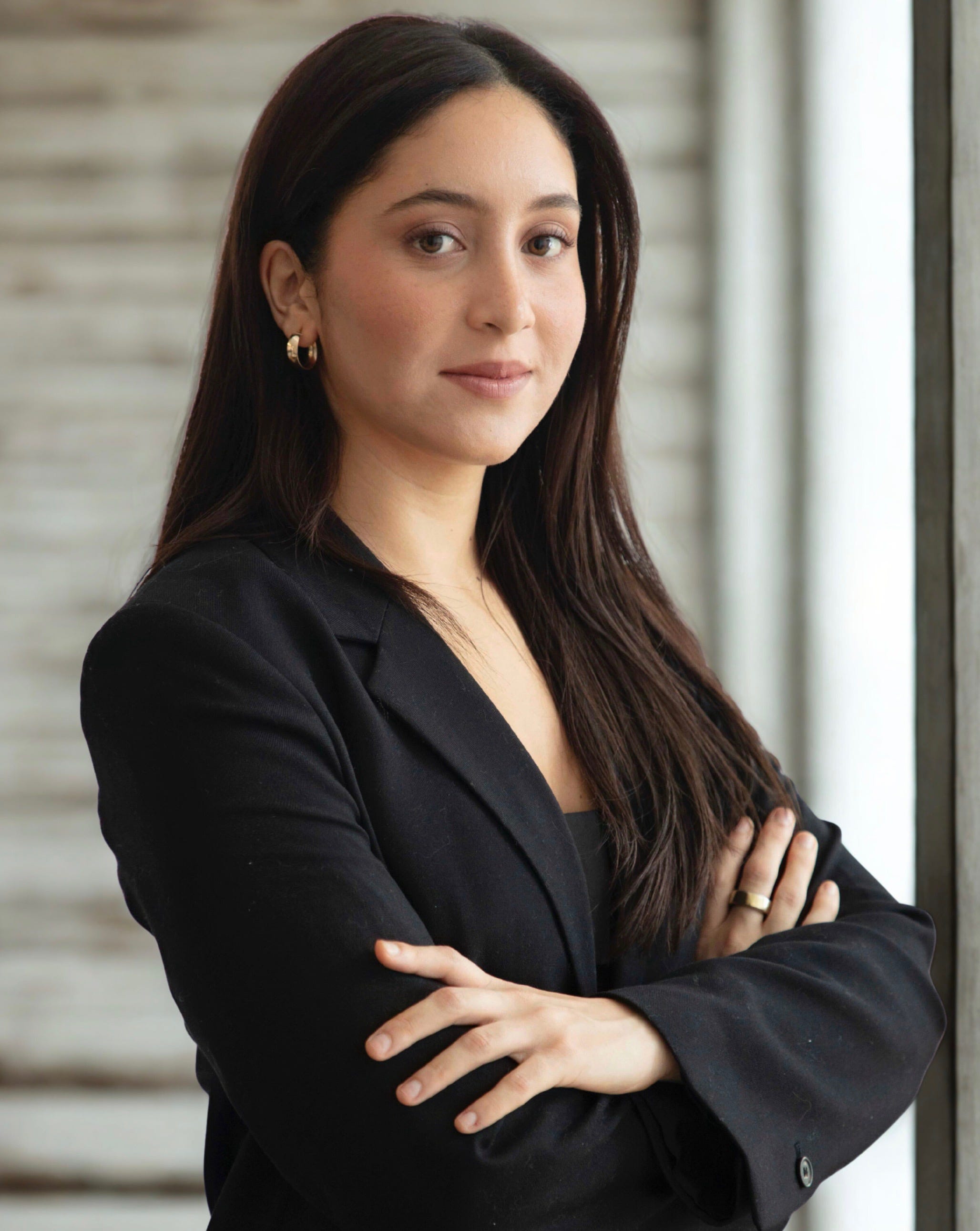
Alexia Coutts, Founder of Muhza Beauty
What was the exact career moment you had when you realized you need to be doing something else?
AC: I think it was a sequence of health events that kept showing up and I was like what is the world trying to tell me? First it was acne, then I got diagnosed with PCOS. I started gaining weight, like I had so many health things come up one by one.
Banking is super competitive, too and I think my hormonal health just started working against what I was doing in finance. And I think when it's hormonal, a lot of doctors don't take it as seriously too—at least that was my experience.
So I was like okay I have to find something that will help me.
SF: Do you remember a specific moment where you decided you needed to focus on skin and building a company around that?
AC: 100%. I was the kid in high school who always had perfect skin. I would sleep with makeup. I could put anything on my face, I never had a single pimple.
When I got PCOS the first symptom I noticed was acne, I was breaking out uncontrollably. Acne is super personal— it's the type of thing where if you haven't really experienced it, you don't know how hard it can be on a person. And at that point, because I was this kid who had perfect skin, I was like, okay, you know what? I'm going to find something to fix it.
I started trying everything. Something would work for a week, and then it would stop working. I've spoken to other women and they're like, "This product worked great for me for a month and then it stopped working." And I'm like, okay, but why? That was the question that no one was asking.

Alexia Coutts via Instagram
SF: Damn
AC: From there I also got really into cycle syncing. Just because of the PCOS I used to have really bad cramps, like I used to throw up.
SF: Oh my God. Same.
AC: Wait do you cycle sync?
SF: I don't, I probably f****** should. But you know what's crazy, I did birth control for one month and I think it changed my cycle forever. I did not like it at all, like I would miss a day and crash out mentally. I only went on it for bigger boobs.
AC: I'm telling you, I used to have the worst cramps—like I could not move it was so bad. And so I got really into cycle syncing and I'm like wait this kind of makes sense for my skin. I started doing trial runs of different products—using something anti-acne right before my period, things like that—but the issue I started running into was that all these products aren't formulated with a one week span in mind, so it was making it worse.
That was the light bulb moment for me. There's a ton of studies on how our hormones affect our skin, but there's just no one looking at how we can improve that.

SHOP muhzabeauty.com | CODE: SLUTTYFOUNDER for 15% off your purchase
SF: In your words, what is cycle synching?
AC: It’s the practice of aligning how you care for your body—from food, workouts and skincare—with the hormonal phases of your menstrual cycle.


SF: How does our skin change throughout our cycle, and how do your products address that?
AC: The easiest way to understand what happens to our skin is that there's essentially three main hormones that we experience in our different phases: estrogen, progesterone, and testosterone.
Estrogen, think of it as the collagen. It increases blood flow to the skin and kind of gives you that glow. Progesterone causes more inflammation in the body and that leads to inflammation in the skin. And testosterone is highly linked to oil. So when your testosterone goes up, you're producing more oil—you probably get more clogged pores.The menstrual phase is where estrogen and progesterone are low. How that shows up on the skin is that it’s dry, dull, sensitive. That's why our skincare focus at Muhza is hydration barrier repair for that specific phase.
Follicular phase is where estrogen starts to rise. So you have an increase in collagen and elastin in your skin and that's why your skin appears more hydrated, firm, glowy. Your cell turnover also increases. At this point, we include a gentle exfoliation like mandelic acid to really boost that glow that your skin is already giving.


Ovulation is where estrogen peaks, but it's also where testosterone spikes. That's why some people are like, "Oh, the best skin of my life during ovulation."
But people who have higher testosterone will probably see more oil during that time. So what we focus on is a lightweight barrier support with oil control—we use a natural retinol alternative, Bakuchiol.
The luteal phase is where progesterone rises. So this one, think about the inflammation and the estrogen drops. You're not having that glow. You have increased oiliness, clogged pores, breakout, your skin is inflamed, irritated. So our skincare focus there is an anti-inflammatory, clarifying, calming serum.
SF: How have you been sharing your products with the world?
AC: I think there's a huge educational component to what I’m building, because a lot of people don't follow their cycle, and don't really understand why this is beneficial. I’m going heavy on Substack. I think there's a lot of growth potential there and it leads to a bigger conversation than a 30 second TikTok.
Obviously social media is a big thing. I’m sharing my founder journey on building this thing.
SF: How do you feel about that? Like this notion that female founders have more pressure to be public facing?
AC: I feel like there is kind of a double standard, especially for women in beauty. I do see a lot more women showing up as the founder face. I try to be very cautious of what I'm sharing online because it can get to a point where people see you as more of an influencer rather than a founder.
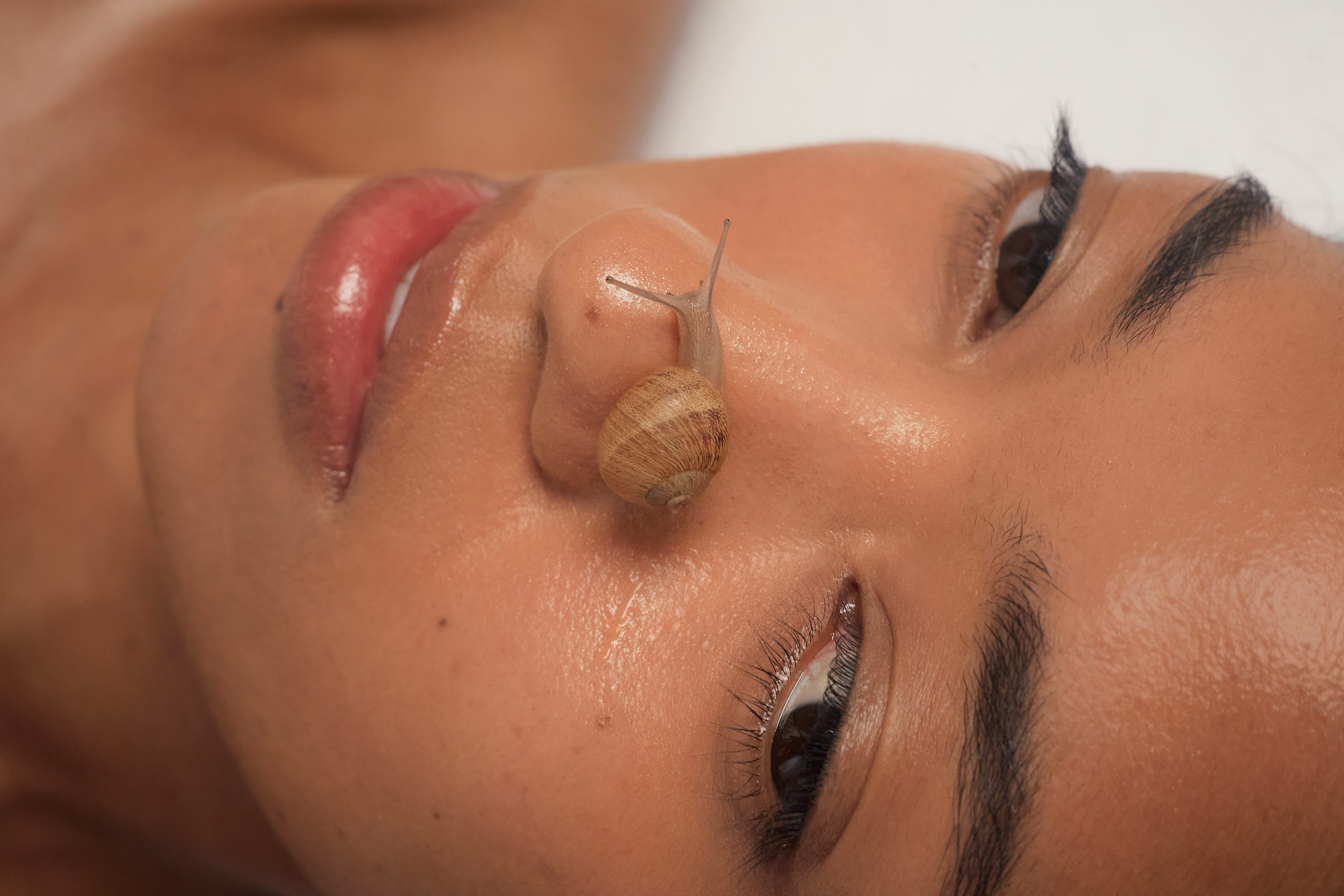
SF: Where's the most unexpected place you're finding creative inspo for the brand?
AC: This is going to sound so cliche, but a lot of my inspiration stems from the relationships I have with other women. I think women in general are so supportive of each other and that's kind of the warmth I want to give to the brand voice—like I'm speaking to a friend.
I was talking with a friend about how much better the world would be if we were in Barbie world.
SF: Don't even get me started on this because I'm like a misandrist.
AC: No, literally. Like if a woman has a commitment with her friends, with her kids, whatever, she's going to show up and I think that's something that I don't see so much in my male friendships. Perfect example: my mom worked her whole life, but she was always there. But my dad was typical like “oh I worked all day, I'm exhausted.” Like a woman would never do that, you know?
SF: NEVER.


SF: Why do you think beauty is in its flop era right now?
AC: I just feel like it's missing soul.
I think people look at the beauty industry and they're like “oh I can just make something and sell it in three years.” They're trying to get the cheapest thing out like “I want to get this product out in six months” and I'm like….that's not going to happen.
I'd rather spend two and a half years formulating, making sure I do a good product rather than just putting something out in the market.
Also in skincare there's so many endocrine disruptors and I'm like, you're making things for women and those things will f****** up your hormones like, I'm sorry, no.
You should be clean, vegan. You should have no endocrine disruptions. You should have no alcohol. It's literally like that idea of like the guy not texting you back and then he texts you back. Like that's the bare minimum. Having these basic things it's the bare minimum.
But most of the brands I see today think this baseline is what makes them different.
Keep an eye on Alexia as she continues to build Muhza Beauty.
Muhza is offering 15% off to Slutty Founder readers with code: SLUTTYFOUNDER
You can shop here: muhzabeauty.com