

Beauty Has Gotten So F*cking Boring
How to win in a fatigued industry after instagram killed all the fun.

It’s Spring of 2018, and I sink into a cracked leather chaise in the lobby of a luxury high rise in Philadelphia’s Washington Square neighborhood. I wait for a leasing agent to tour an available unit that I have absolutely no intention of renting. I pick up my phone and fire off in a text rant triggered by a popular beauty brand’s Instagram post—they act like they’ve discovered Calendula (please), which I’ve long been formulating with for my emerging brand, The Established. My fingers tap frantically against the screen as I triple message about how sick I am of the mediocrity. I had always been hyper-critical of the industry, even back then.
Interrupted by the leasing agent, I'm led to a mid-floor unit.
We fake conversation and naturally, she asks me what I do for work.
“I’m the founder of a skincare brand, called The Established,” uncertainty colors my voice as I reply. I was only bartending at the time and refused to get a real job.
She asks if I have an office nearby. Since my younger years, I’ve always felt like people could tell when I’m lying, which is why I seldom do.
“I actually work out of the WeWork not too far from here.” I tell my first lie in probably 20 years; another one will follow in this essay.
At this point, I hadn’t even gone full-time, but I was exercising a new identity that aligned with I was observing closely on social. Beauty was undergoing a radical shift. Consumers were becoming more scrutinizing and less forgiving — ingredient transparency, efficacy claims, inclusion, and sustainability were all on the chopping block, and everyday there was a new brand popping up that promised to do it better.
This apartment showing was a manifestation exercise, and this poor, unsuspecting leasing agent, just a supporting character in my narrative.
Instagram had become my primary source of motivation with its increasingly democratized landscape fueling my belief that a new chapter was hovering over me by way of my minimalist skincare idea.
Although it would be another year until I officially launched The Established to an e-commerce market, I ask the agent if she has anything with a better view.
“I’m not really too set on price,” I say, this time a little more confidently.


Imagery via @theestablished Instagram circa 2019
Scrappy and Social
By the time I officially launched in 2019, mainstream beauty brands were cautiously tip-toeing around until they pivoted towards fostering more honesty and inclusion. This transition created a great white space for smaller brands to take stage as they had no need to play catch up or rewire their ethos. This underscored a serious reshaping of Beauty, which made room for indie brands to offer something legacy brands could not—radical perspective and identity.
The Established started out with 300 IG followers or so — mostly friends and family that migrated from my personal account. My initial frustrations with growing a following were replaced with the realization that anonymity was an advantage. There were no missteps, being that few people were there to witness them, and strapped with a scrappy attitude, I began to really experiment with an online strategy.
Our earliest posts featured leisurely stills and tongue-in-cheek graphics that read things like “I like my products like I like my people. Non-toxic.” Omg CRINGE. Sounds stupid as hell today, but stuff like that really went up at the time. Plus, it was nothing to gain visibility. Christina Milian was the first celebrity to ever give us a like, which gave me hope around the algorithm. I don’t even think I used a single hashtag and I still have no idea how she’d seen it.
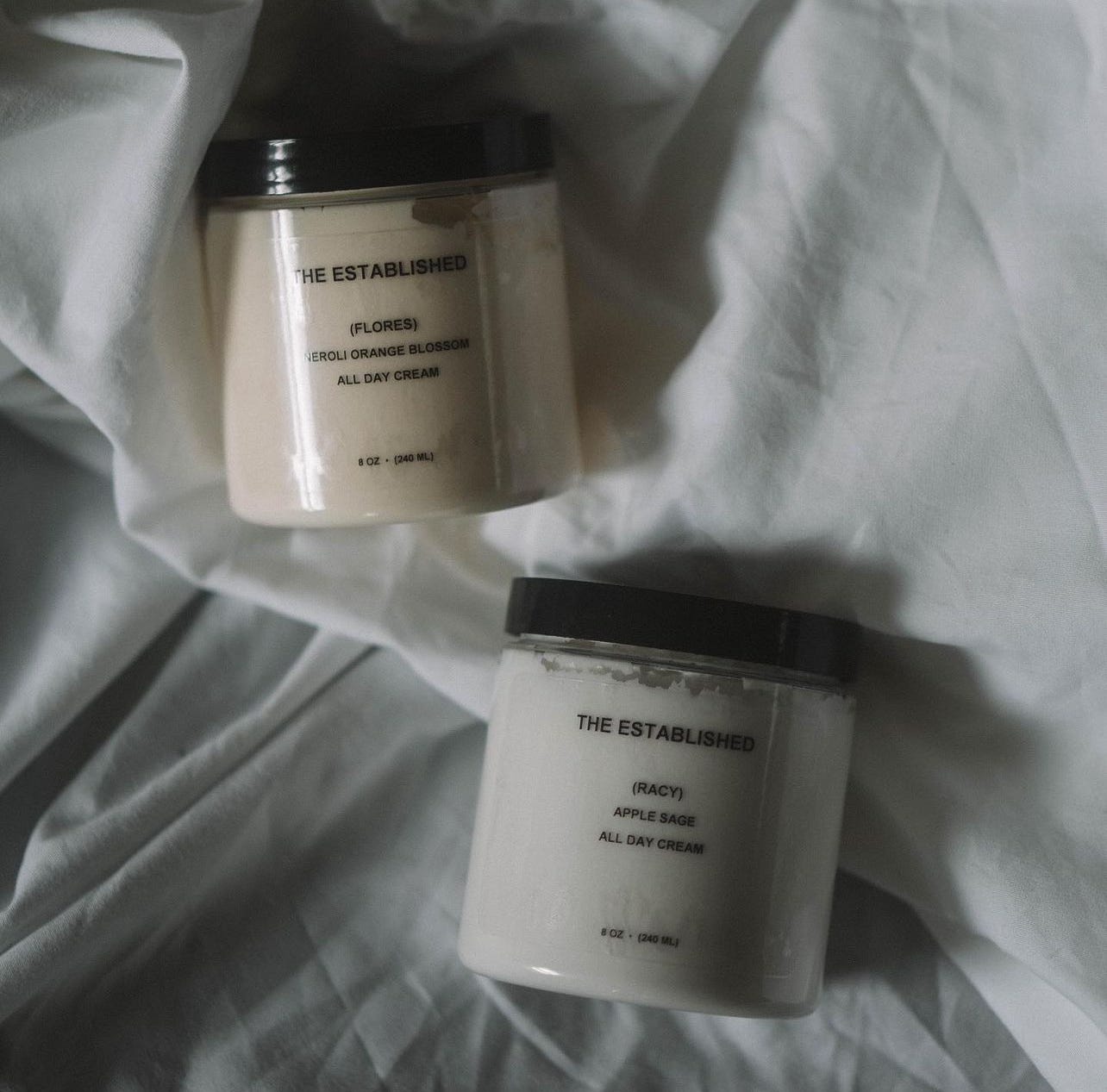
Imagery via @theestablished Instagram 2020
When I began to employ more strategy, an idea that I concocted was to advertise on Craigslist in search of models to represent the brand in a campaign (plot twist: there was no campaign). I felt bad for the bait and switch, but I was desperate to keep growing. Plus, I didn’t have thousands to shell out on working with influencers by industry norms. I did, however have $10 to place an ad in four major cities. I called for a targeted demographic in Philadelphia, Chicago, New York and Los Angeles. In the advert I mentioned that all submissions must be following the brand as a requirement or they would otherwise be ignored. Our Instagram follows along with my Gmail started to pour in.
Over the course of one month, this project took our page from a few hundred followers to a few thousand. Perhaps because they were hyper-targeted, very few unfollowed and most stayed engaged with the brand. Although there was no actual live campaign, I had successfully converted every girl I really liked into a digital creator, gifting them for free while nurturing an online relationship. This marked the beginning of our influencer marketing program.
I was getting free content, establishing connection with model/creators, and creating a digital experience — virtually for free. The social media climate made this more ripe than ever.


Imagery via @theestablished Instagram, circa 2020
The BANDemic ($) Era Social Media Landscape
2 years after my apartment tour manifestation exercise, and at the height of a global pandemic, I would move into a much bigger and better space than I could have imagined—an 1,800 square foot loft on a top floor unit that I mostly dedicated towards housing the business. I became full-time due to a viral Instagram share by Cosmopolitan, the impact of which took us up by another several thousand in a single day (I had forged a relationship with the Beauty Editor at Large via DMs).
This, along with many other features during the BLM movement, only intensified the digital experience for many Black-owned brands, not just mine (thank you White Guilt! <3), and the spirit was palpable. Fellow founders were connecting with one another and engaging in online conversations that overstepped traditional strategy. We were bridged together through shared features and beauty roundups. You could find us popping up under each other’s comments with a “hey girl!” or a “yassss” under each other’s brand pages. We were establishing community and creating our own network within the industry where collaboration trumped competition. Everything felt like a cookout where you weren’t afraid to get up and make yourself a plate.
While the creator economy started to grow legs, influencers proudly touted their allegiance to indie brands and were open and generous in their support. Every brand founder wanted a piece of the it-girl with the authority and marble bathroom to skyrocket her product to mass awareness. Looking back, it felt like all elements of the digital ecosystem functioned in more harmony, which allowed us to win big, so long as the product was good and, well, aesthetic.
Instagram continued to house beauty and remained my primary social focus as the landscape kept unfolding. The algorithmic pressure would still be mostly gentle for about another two years, until Reels exploded, which I think is responsible for ushering in the shit-show we see today.


Imagery via @theestablished Instagram, circa 2021
The Thrill Is Gone
2022 ushered in a wave of hedonism, perhaps due to in-home boredom and wellness fatigue. We started pulling down our camera exposure, and photos transitioned to videos—making beauty a full on performative act. Reels shifted the focus from ritual and personal expression to an endless chase for likes and visibility that users were never going to win unless they quickly adopted the Tiktok knock-off as a part of their social media diet. Because IG was in dire competition, it prioritized users that utilized the feature. The chances of going viral was possible, but the improbability of that put a desperation for visibility at the forefront— especially for brands who couldn’t go big on Meta ads just to be seen.
The algorithm became even more suppressive as Instagram continued to compete with the clock app, and we began to see a decrease in organic reach in favor of paid advertising, forcing founders to either cough it up or shift their focus towards going viral. Your only two options were to either become a bank or a filmmaker. That’s it.
I’m Tired of This, Grandpa
Success began to depend heavily on your willingness to participate, and founders started nurturing their personal brands as another marketing channel. I made a great attempt at swallowing my social anxiety in order to show up more online. My content—mostly seductive depictions of our product, Elixa, or my founder lifestyle, performed well, because by this point audiences expected to see a face in front of the brand. I eventually developed a strategy that would earn me as many as 1M+ views on a video, but boy, did I pay for it.
Creating, editing, and copywriting was, as you would imagine, exhausting. I quickly learned that there was no way I was going to sustain being a content creator and brand founder at the same time. I stepped back for a little, while also beginning to question what it would mean for the brand’s success if I chose to bend the rules and exist independently of it. I knew it would take some Mary-Kate and Ashley level type of privilege.
It became challenging to move past the recessed visibility without the bandwidth to provide full-scale audiovisual production on a consistent basis. This did put tension on the brand. On days where I had more energy to create, I struggled to find the inspiration. The videos I would look to for trend on the explore page left me cold, and I would end up cheating myself out of content days. I allowed the brand to go days at a time without posting, and realized, it didn’t even make much difference. Posting everyday didn’t have the same value as it once did and there was no guarantee that your post would even be seen.
Every video I saw online became monotonous; the new viral beauty strategy, nauseatingly typical—mostly rapid stop-motion shots of a glass skin routine or some stupid ass ‘girl therapy’ theme with pink tulips in the backdrop. There was clear rank, and it was obvious.
By 2023, all of the air was let out of the balloon.
Kim, there’s people that are dying
Instagram's impact on beauty culture and brand success has been profound, but not without its drawbacks. We’re living through a seismic cultural shift, and a great awakening in our relationship to content and consumerism. The collective fatigue is [deep sigh], and given the symbiotic nature between Instagram and product discovery, it seems like the less people care about Instagram, the less they care about beauty.
Beyond the silent luxury movement, it seems like everyone’s paring back, becoming more austere. Like…Kim, there’s people that are dying. My group chat these days are a little less product rec and a little more ‘Bestie mental health check.’ I went to Sephora recently and spent less than $150. The standard re-ups. I didn’t even purchase anything new. I haven’t posted beauty content or asked for gifting in ages. Haven’t cared to. And yet, online, we’re somehow still being served more and more of the same thing while being less engaged than ever.
Blink Twice if Your Investors Made You Do It
Beauty has become so fucking boring, homogenous and stale.
I find it challenging to recognize an industry I once absolutely adored. Sad, even! Brands all vibe the same, have the same product offerings, use the same creators, and have the same stakeholders pressuring the same outcomes. This trickle-down has created a sense of banality so bold that I’m personally offended.
A popular body care brand that I won’t name, teased a new drop last week, and I rolled my eyes and almost marked it spam. I was left wondering how a brand I viewed once with at least some level of regard, could piss me the hell off over a launch? The gag is—I know it’s not fully up to them.
I feel like every launch these days should come with a t-shirt that reads “my investors made me do it.” The investment landscape has pressured brands to move at an unnatural pace, and it’s even more heightened by the inundation of endless product teases to the omnipresence of celebrity brands—many of which I’m convinced are fronts for money laundering or other nefarious activity.
There’s a consistent push for more products, with no actual dialogue happening or evolved needs from the consumer. As a brand founder, it feels like such a silly shuffle to get caught up in, and frankly, I personally don’t know how many more lip oils or ‘holy grail’ moisturizer launches I have left in me.


A (rare) couple of brilliant launches that got me going recently | Rhode Beauty phone case; Eadem’s Le Chouchou
Image via Pinterest; @Eadem Instagram
So What Now?
So how do you win in a world where fewer founders are willing to participate—either because they can’t pay to be on the wheel or they can’t muster up the energy or excitement to compete for the visibility olympics?
Trigger Warning: Don’t focus on the sales.
I know, you need cash flow! But you have to prioritize making friends over revenue—probably now, more than ever. The era of simply showing up online and turning a profit is over.
Today, success hinges on creating your own club and here are some ways I think you can win given today’s landscape:
Focus on genuine storytelling and ditch the product-centric marketing narrative. Consumers don’t need to be overly educated anymore.
Focus on the (actual) product experience. Invest in creating truly innovative, high-quality products that solve real problems for consumers.
Divert your attention from Instagram and go over to Pinterest, where beauty also lives (higher conversions, easier visibility, less CPC if you choose to run ads).
Build community: Foster genuine connections with your audience beyond social media. In person events, workshops, or other IRL experiences are taking it these days (see Saie Beauty — NAILS IT!)
Remember that building a successful brand takes time! Stay true to your vision and values, even when it seems like everyone else is chasing quick wins.
I admit it’s hard for me to pull from the same inspiration I once had in the brand’s early days, and although my relationship to Beauty has evolved, and my career ideals have massively shifted with the industry’s evolution, I hope that this adds some perspective for those of you still hanging in there. I do have a hunch that the pendulum will swing back in a way that allows killer brands to shine as people become more and more uncaring. What goes around, always comes back around in some way. Until then, just have fun with it.
These are the beauty perspectives I live for! Your voice reads like my kindred shower thoughts that I've always wanted to volley in conversation. I look forward to relishing in more of your offerings.
I’ve been a customer for a while. I really enjoy your advice and expertise on this subject. Even though I’m not in the beauty industry (I’m an author) I still can take away key points every time you post. Thank you! I totally agree with you on “how many lip oils do we need!” LOL!