

7 Things I Would Do Differently
(If I Were Starting a Beauty Brand Over From Scratch)

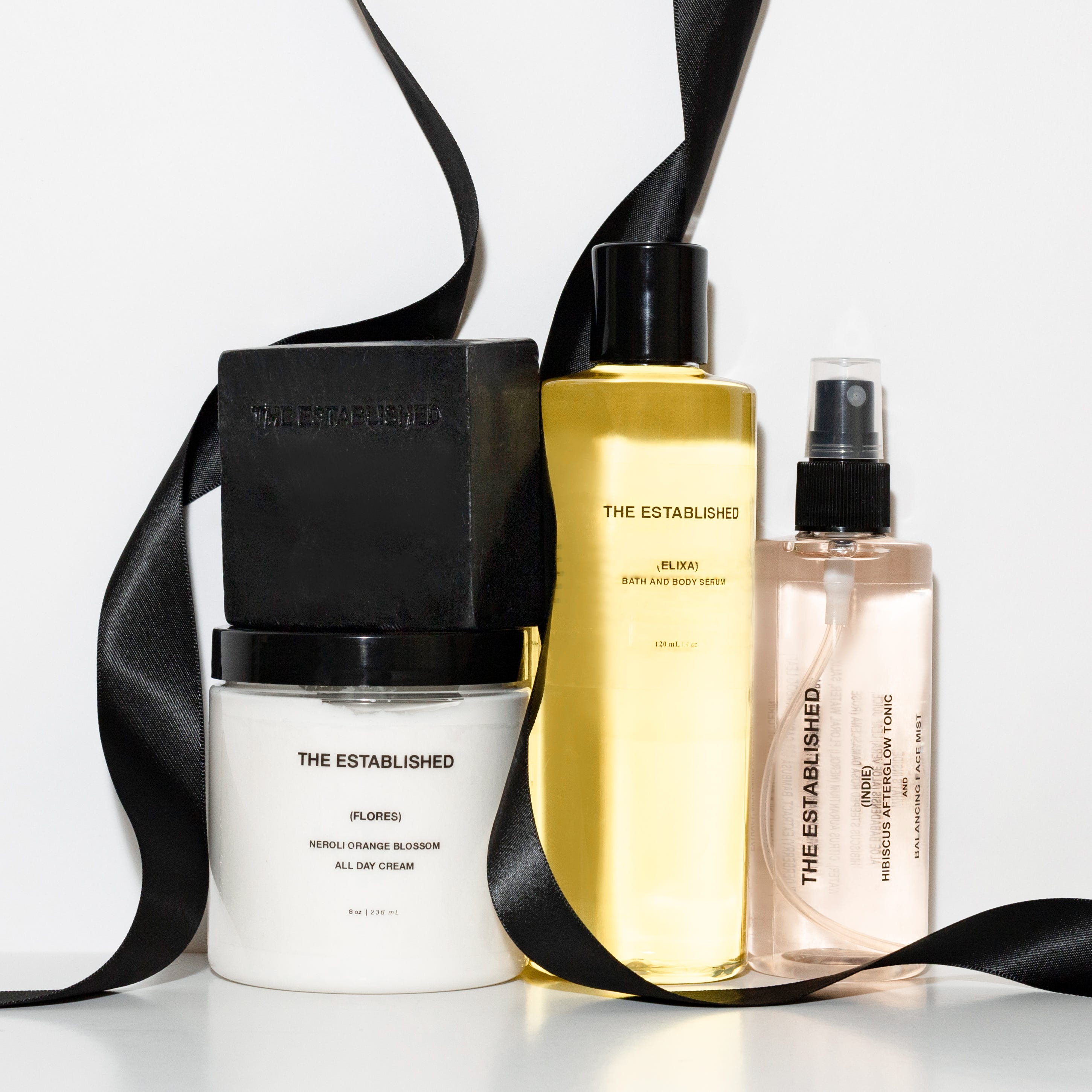
When I started my beauty brand, The Established, one of the things that stands out in my memory is the painful experience of not knowing where to prioritize my focus — even more so as a first-time founder. I felt like there were so many areas to manage, and the thought of pouring too much into one area over another left me paralyzed from the overwhelm.
7 years later, as a more seasoned founder, I have many thoughts about where my focus would lie if I started again from zero. Through years of trial and error, hard lessons, and invaluable experiences, I've gained clarity on what matters when building a brand from the ground up.
Here are 7 very candid things I would do if I were to start again from zero.
I Would NOT Quit My Day Job
I’m going to hold your hand when I say this: Don’t quit your day job. I know, says the girl who quit her day job.
Now, hear me out before you call me a jobless little hypocrite. Do as I say, not as I do! Here’s the thing—there’s no way I could have foreseen quitting my 9-5 job and then going viral in Cosmopolitan the day after. That was a supernatural stroke of timing meeting luck, which I still remain very grateful for, but could not have predicted. And because I’m self-aware and I understand that most people don’t match my threshold of crazy, I want to acknowledge that a life of compromised stability is not for the weak, and it’s certainly not something that I’d encourage. You will need as much peace of mind as you can have while building your business, and 90% of that is having the funds to navigate the journey as smoothly as possible.
The whole ‘I believed in myself and quit my job, and things worked out!’ is so 2019 girl-boss core and played. UNLESS you have an unwavering level of blind faith in the universe, you might want to keep it cute. There’s no shame in having a job. People don’t even have to know! I have plenty of well-regarded founder friends who have clocked in behind the scenes. This doesn’t take away from the brilliant work that they’ve done and continue to do within the beauty space. You can (mostly) control your means by way of working, but you can almost never control the unexpected responsibilities that may come up while building your business. I say stability first until you’ve absolutely proven to yourself that you can sustain a business full-time.
Remember that it’s impossible to run off fumes, even if you do have 24/7 hours a day to dedicate to the business. It’s a myth that you need excess time-freedom to build a brand. Doing both won’t kill you. Annihilate your ego and grant yourself some stability while you nurture your dream.
I Would Raise Money
I do feel that with Black founders specifically, there’s a strong stigma around raising capital and leaning into investors to fund our ventures. I can’t tell you how many times I’ve heard other founders shoot down the idea of raising money because they ‘don’t want somebody else owning their company’ or because ‘they don’t want to answer to someone else.’ I mean, valid, I guess. But I think what lives underneath that sometimes is a subconscious feeling of undeservingness; a lot of us simply are not comfortable asking for what we need or subjecting ourselves to the consistent and inevitable rejection—especially as women. I can speak for myself in that I didn’t prepare to ask for money boldly and unabashedly for that reason.
Outside capital can propel you towards exponential growth much faster. It could land you wider distribution and brand discoverability, trusted insight, and proven brand strategy — provided your stakeholders have had some success in the space before. Investors can get you a team, faster inventory growth and manufacturing, access to different retailers, access to other investors—the list really can go on. Had I raised money, the support from stakeholders may have allowed me to preserve some of my energy. Having to source your own funds to grow and scale will have you burned out, especially if you’re in your business full-time and your revenue is directly tied to your livelihood (that cycle never ends, btw).
The biggest caveat about having investors is that you have to be prepared for the pressure from stakeholders to continue to grow at an ultra-rapid pace. Good luck saying no.
I do suggest for those who have an acquisition or exit as the end goal, to fund their brands early through outside capital. It’s a huge feat to try and go alone. While I acknowledge it’s there, I’m not interested in touching too deeply on the obvious systemic barriers minorities and women face in raising venture capital. There’s enough trauma porn out there about that, and that’s not a way I intend to use my platform. But do as you will with this suggestion. Understand there are some successful bootstrapped brands that exist as well as overly celebrated brands that crash out just some years after having raised tens of millions. The thing that equalizes us as founders is the inevitability of potential failure. The probability of such a fate is indiscriminate. My thing is — wouldn’t you rather explore the possibility with somebody else’s money? Today, I would.
Bring On a Co-Founder
This super rich man I once went on a few dates with told me my first mistake was not having a co-founder. That comment stuck with me. It intrigued me that he was so fixated on this, while it was something I had never looked at as important or valuable to me. Perhaps due to hyper-independence, perhaps due to selfishness and wanting to keep every dollar to myself. Although I maintain that I make for a strong solo founder, my thoughts on the way I view having a co-founder have greatly shifted. Here are my reasons why I’d consider one if I had a do-over.
A co-founder might have access to a network or capital that you may not. Additionally, from an investor's lens, it’s an advantage to be anchored to someone else more solidified or authoritative in the space.
A balance of energy; you can allow them to exercise their expertise while you continue to act as the visionary (or however you assign yourselves). A co-founder should bring skills that complement your own. You have more room to leverage their gifts to fill gaps in areas like social media, creative direction, finance, product development, or operations, leading to much less burnout.
It’s less isolating and lonely. When everything lives in your head, and your head alone, it gets challenging to handle the workload effectively.
Accountability; there’s a different standard to uphold when there’s someone else around to hold you to your responsibilities. Shared accountability (to me at least) is a really strong motivator.
If I were to do it over, I’d rethink going it alone. I would dedicate my time to sourcing the bossiest, bitchiest, brightest co-founder with an insanely impressive background and network. This may have shortcut some of the time and effort it took to build solo from scratch by leveraging their insight and experience. As far as revenue and splits go, I wouldn’t let that discourage me. 50% of something is better than 100% of nothing.
Launch With A Single MVP
Over the years, I’ve grown averse to having too many products in a lineup. I whimsically launched my brand with 8 SKUs, and it's not something I would do again.
In the beginning, I didn’t think critically about the labor of having to crank out so many different types of products myself or about the costs associated with sourcing their individual ingredients and packaging. I definitely overburdened myself. When I decided to pull back on some SKUs, I isolated the customers that had fallen in love with them (OGs remember the Racy All Day Cream), which was tough to clean up. That said, I would have designed my product line with the modern shopping experience in mind — with less as more. Customers aren’t asking for a ton to choose from, but the more you offer them, the more you have to stand by.
If I were to do it over, I’d create a product that solves a unique problem specifically and solidify product-market fit before carving out a line around it. Ideally, that product validation would create a need for more essentials (and you might even be able to raise money around this). My focus would be on building trust and authority within your sector inch by inch. Establishing product-market fit with a solid offering also allows those early adopters to become brand-loyal evangelists who create the most lifetime value.
I would not get discouraged or feel pressured that I’m starting off with too few products. Many successful brands have launched with a single product to a niche audience and have carried on with 1-3 products in their lineup for years before entering new verticals (think Vintner’s Daughter or Eadem). Even the most niche skincare problems include millions of customers to be captured (and that’s just within the US alone). Understand why your audience needs your help specifically and own them by doing one thing super well before moving into other verticals.


Establish a Powerful Visual Identity
Technically this doesn’t count as something I’d do over since I think I nailed it the first time around, but I really want to accent the importance of establishing a stunning visual identity early on in your brand build.
I think the more creative aspects of building a brand tend to get unfairly overlooked. I see a lot of early stage beauty founders neglect the importance of establishing an enviable visual identity, only to wonder why they aren’t getting picked up by publications, converting on ads, or making waves on social. You simply might not be standing out!
If you were discovering your brand for the first time truly ask yourself — would I buy this shit? Every element of your brand identity should reflect the brand's personality and voice and create sharable moments for you to capture. Consumers expect polished, aspirational visuals that reflect the quality and credibility of a brand. Visual appeal can influence consumer behavior in several ways, making them more likely to engage with the product. A great way to assess where your visual identity falls is by asking yourself the following: Does it fit in with all of the other products that I love? Can I picture it on shelves next to the high end body lotion I use daily? Do I see an influencer integrating it in their next #shelfie post? Does my product stand out? Does it inspire? If at least one of these answers is no, then you have some design work to crack down on.
I had an advantage in this area as I’m a designer. But if you’re not the most aesthetic person, that’s okay! Prioritize outsourcing the work. Hire a photographer to shoot high resolution brand imagery (our photographer was as low as $30 an image) to communicate value and credibility. Many of these will be evergreen images that you’ll use throughout the life of the brand. If you make and manufacture your product from home - that’s also fine! In this day and age, there’s just no excuse for it look like you do. If you’re already in business and sensing community engagement could be better, don’t shy away from tweaks or a rebrand.
You’ll be surprised how many publications, tastemakers and other brands will be triggered to share your product (for free) or even partner when your brand simply exists on the spectrum of gorgeous.
Prioritize Community Over Revenue
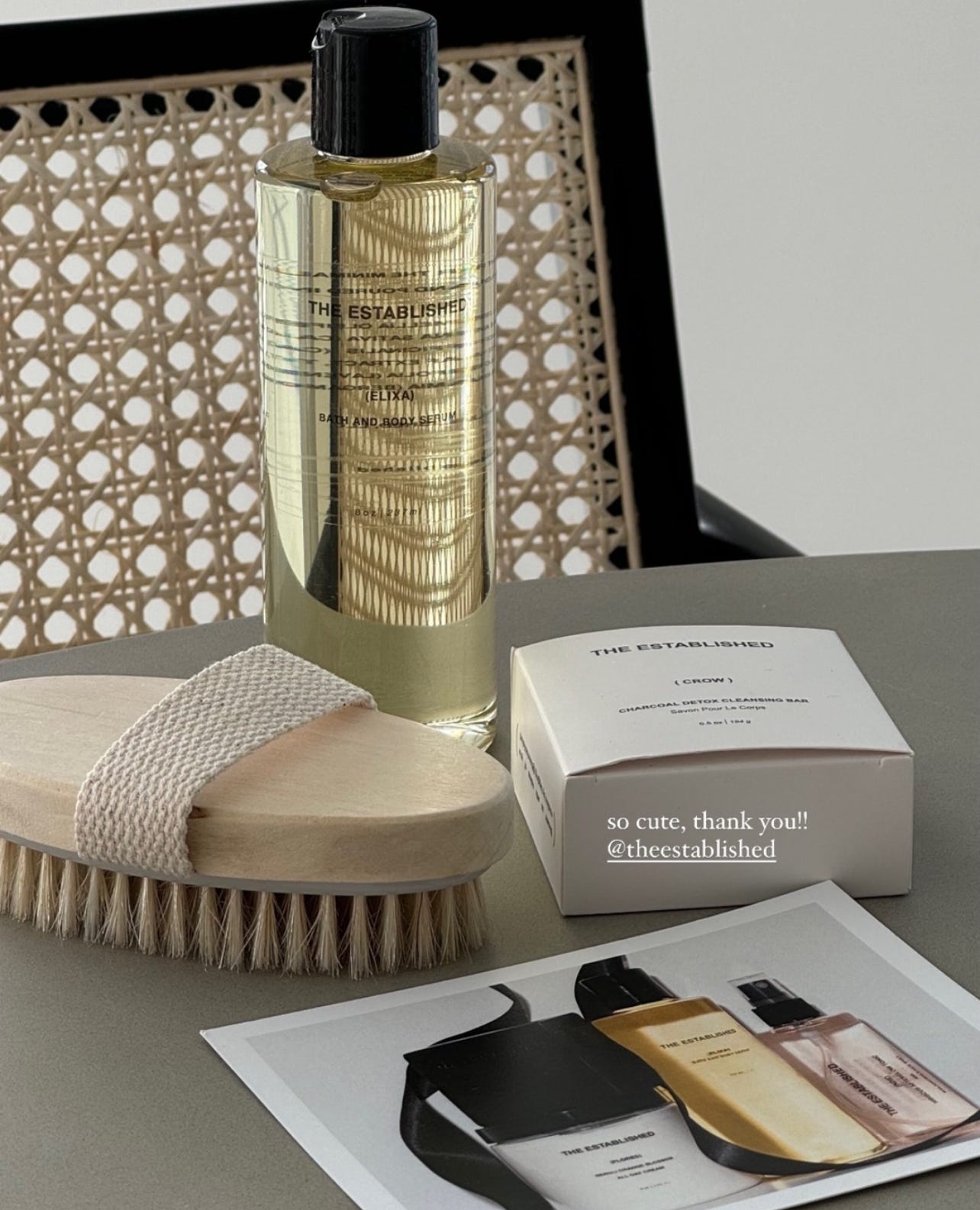
Having a strong community focus is a hill that I’m willing to die on. You should be invested in creating a space for your audience to connect with one another with your brand at the center.
Many early-stage founders can be overly entranced and disillusioned by the shiny things that they think create revenue. Like having hundreds of thousands of followers, working with expensive creators, being overly fixated on celebrity endorsements, or eyeing glossy partnerships, dumping a ton of money on ads, etc. These things almost never convert to sustained revenue. There’s no long-term value in investing all of your energy and resources into one-and-done exposure. Instead, you should be creating a lasting brand experience by nurturing your existing customer base.
Treat your customer like the celebrity. Prioritize your owned audience. I’d start with my email list as these customers already exist within your funnel and have likely migrated and carried over to social. Take the attention off of brand outsiders and instead, create a sanctuary for your own customers to engage with you and each other. You could share pieces about your unique journey, ask them their opinions on products or upcoming launches — there’s room to be creative. Rhode Beauty does a great job of harnessing community by exclusively sending goop and product samples to their everyday consumer so they feel they’re a part of the brand’s future. Many beauty brands are now adopting this approach and leaning into treating their online communities like a club.
Doubling down on this notion of revoking your attention from the celebrity or influencer to drive growth, recognize that today’s customer doesn’t want to see that the actual dollars that they're spending with you are being spent on people that are only paid to talk about you. It reads as though you’re discrediting their value, which creates a broken brand experience. Create the illusion of omnipresence through this shared experience of brand interaction and this will lead to long-term sustained revenue.
Don’t take it that f’ing seriously.
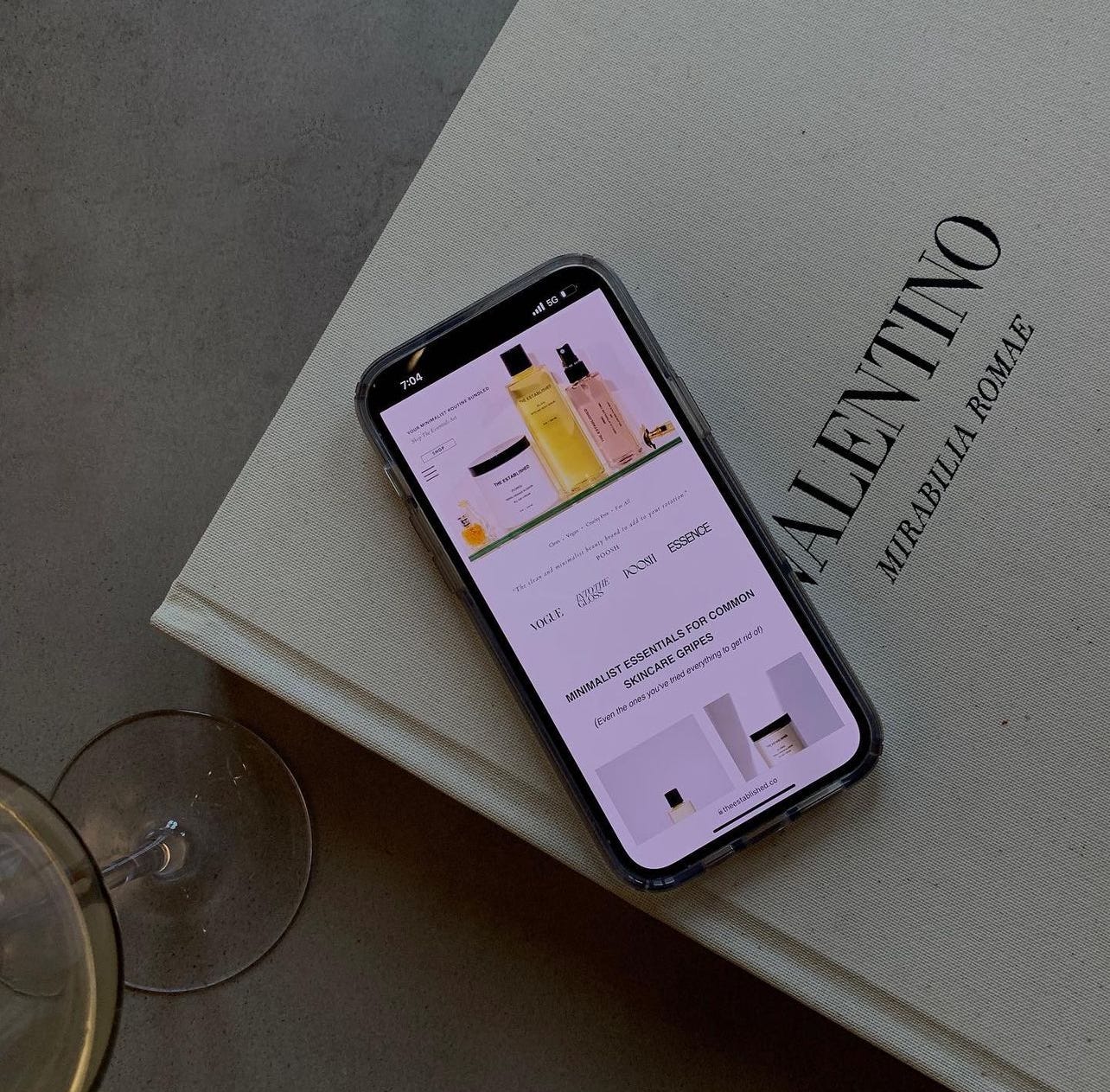
You wanna know what an absolutely unhinged founder with no identity outside of their brand looks like? Cue Essence Iman around 2021-2022. I drowned in thoughts around my business 24/7. I don’t think I had a single thought in my head that didn’t swing back to The Established. It was only when a girlfriend asked me about the last time I took a break that I realized I hadn’t since I started. Years. Frankly, I was afraid of what stepping away (even for a second) would mean for my numbers. I really allowed the success of the business to consume me and dictate my self-worth.
For the sake of your well-being you do not ever want to arrive here. Next thing you know, you’re having panic attacks for breakfast. Do challenge yourself to look at your business as a project; a simple experiment. Don’t take it as the end all be all that you’ll never be rich or successful if you don’t hit it big with this one idea. That’s how you become overly-identified and unhealthily attached to it, which I can tell you from experience.
Find me an overstuffed man on a Monte Carlo yacht that doesn’t have at least 2 failed ventures under his belly and I’ll drive down the PCH and pull a mermaid out of the ocean with my bare hands. Smart founders understand that the world is made up of thousands of multi-millionaires and billionaires that didn’t get it right the first time. You wouldn’t be the first person to bomb a venture so get over yourself. In the event that it actually does happen, it’s actually kind of chic and fab! De-pedastalize all of the ego-rooted ideals you have around where the success of this will land you and prioritize your curiosity. By no means should this decree or define your destiny.
Excellent insights! Co-sign all of this. 50/50 on the co-founder element but ultimately better to have a part of something than nothing at all.
Loved all of them! I 100% agree with the start with one product, co-founder, visual identity early on as well as prioritizing community. All amazing insights. Excited to continue to read.