

2025: The Year of the Beauty Brand Closure
+ new rules for 2026 and beyond

Slutty Founder is a weekly-ish newsletter about the business of beauty.
Hello and welcome to our first newsletter of 2026.
It's been almost a year exactly since I published the essay that would become both my most-read piece about the most misunderstood moment of my career: Why I Shut My Award-Winning Beauty Business Down.
In the article I detail that what struck me most in the weeks following my shutdown was the readable disappointment from people who couldn’t pick up on why I seemed to be so genuinely unbothered about this massive change in my career.
In mid-2024, closing a brand was still treated as a jarring decision to make—an admission of defeat that made you ripe for example as a cautionary tale.
Underneath every nosy “what happened” really was “what happened so I can make out better than you did.”
Now with light of this year, the “why unfollow your dream?” narrative has come to feel a little low-EQ and entirely dated even though it’s such a short time later,.
2025 was the year of the beauty brand closure.
Beauty brands shut down in waves.
Here are a few to jog your memory (some of which I’ve written about here):
Futurewise
Ren Skincare
Pat McGrath Labs (assets up for sale)
The announcements came so frequently that by year's end, we'd become desensitized to such news.
Even a number of close friends of mine with brands still open confessed to me their serious thoughts about shutting operations down—many of their brands well-known and critically acclaimed.
2025 was a reckoning.
And this year, so many founders were left wondering—why keep pouring my labor, capital, and identity into a slot machine that feels less and less rewarding?
Oh, what life was before we blamed the algorithm


The dominant beauty playbook from roughly 2016–2023 looked like this:
Discovery → DTC → Community → Retail Validation → Mass Distribution
Once upon a time you launched with a hero product and a good founder story.
You built community through Instagram, cultivated yourself some brand ambassadors. You proved concept through DTC, then leveraged that traction to secure investment and then larger retail channels. From there, maybe you’d scale internationally or become an acquisition target for a conglomerate looking to capture your audience.
This model worked because consumer attention was more abundant. Efficient CAC was achievable, and retail still signaled inevitable expansion. [Some] founders could still raise capital based on potential and the assumption was that scale would eventually solve for the unit economics.
As of today these variables have fundamentally shifted, the most notable to me being retail.
Landing a dream retailer is no longer a benchmark for inevitability.
With the influence of channels like Tiktok Shop + Live Shopping, in store retail is no longer a vital discovery or growth channel. One of beauty's best-kept secrets is that department stores like Nordstrom and Bloomingdale's place the smallest PO’s! I’m talking like 12 units across a SKU. They’re not buying by the boatload, like unseasoned founders fantasize about.
Beyond the tiny orders, many of these retailers are barely staying afloat themselves.
Saks has dominated retail news this year with their financial struggles. They still owe one of my girlfriends an invoice.
And let’s not even start on Sephora who is developing a bit of a reputation as a place where indie brands go to die. To win in that store, you have to play by their rules, which is hard and expensive.
Nearly all of the shuttered brands I listed above counted Sephora as a retail partner. It goes to show that treating Sephora as the holy grail shouldn’t hold such weight.

Aspiration is dead
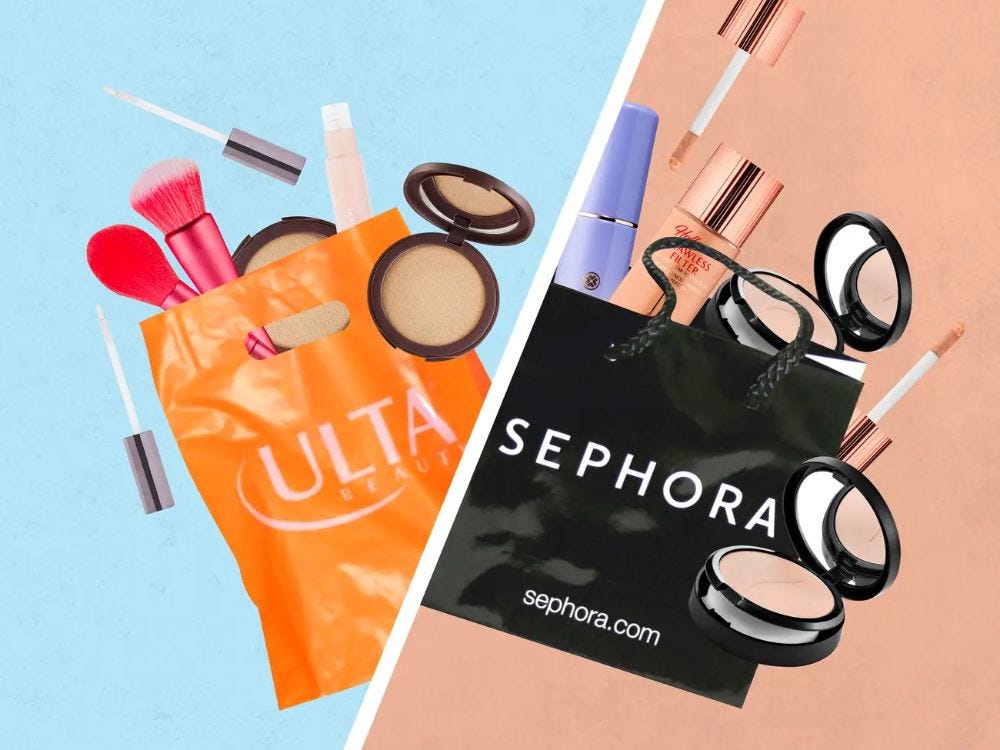
Image // Alyssa Powell for Business Insider
In an economy where the future feels illegible, consumers are buying products to self-regulate. Aspiration implies a future, which, by now, most Americans have stopped trying to envision.
Alongside this, I notice more brands de-elevating their brand equity in order to move faster and sell more. They’re consciously trading the cachet that comes from being selectively distributed in a market where the economy is tense and attention is short.
In other words: no one’s too good to trash it up a little in order to grow.
A few years ago, my friends and I with prestige brands would have turned our noses up at selling on TikTok Shop. Now, brands like Dieux and Topicals are performing well there—come to think of it—my first Dieux order was from TikTok Shop, even though the brand is also in Sephora. I’m still as equal a fan even though Tiktok Shop was my entryway.
Outside the prestige market, brands have more room to win, reaching an audience that wants value and convenience. On TikTok Shop, customers get a discount while the platform drives traffic and conversions for the brand, creating a mutually beneficial setup.
At the same time, aspirational channels are showing less upside, and brands that cling to them are leaving growth on the table.
This year, Ulta posted growth across major categories while Sephora declined—in Spring 2025, makeup was up 4% at Ulta vs. down 25% at Sephora; skincare up 17% vs. down 2%.
Consumers have stopped prioritizing aspiration over practicality. Sephora only offers one (aspiration), while Ulta prioritizes accessibility—operating like a grocery store for beauty. You can get a $10 product and a $60 product in one trip, with a loyalty system that actually pays you back.
Why stay where customers are pulling back when you can go where they’re actually spending?
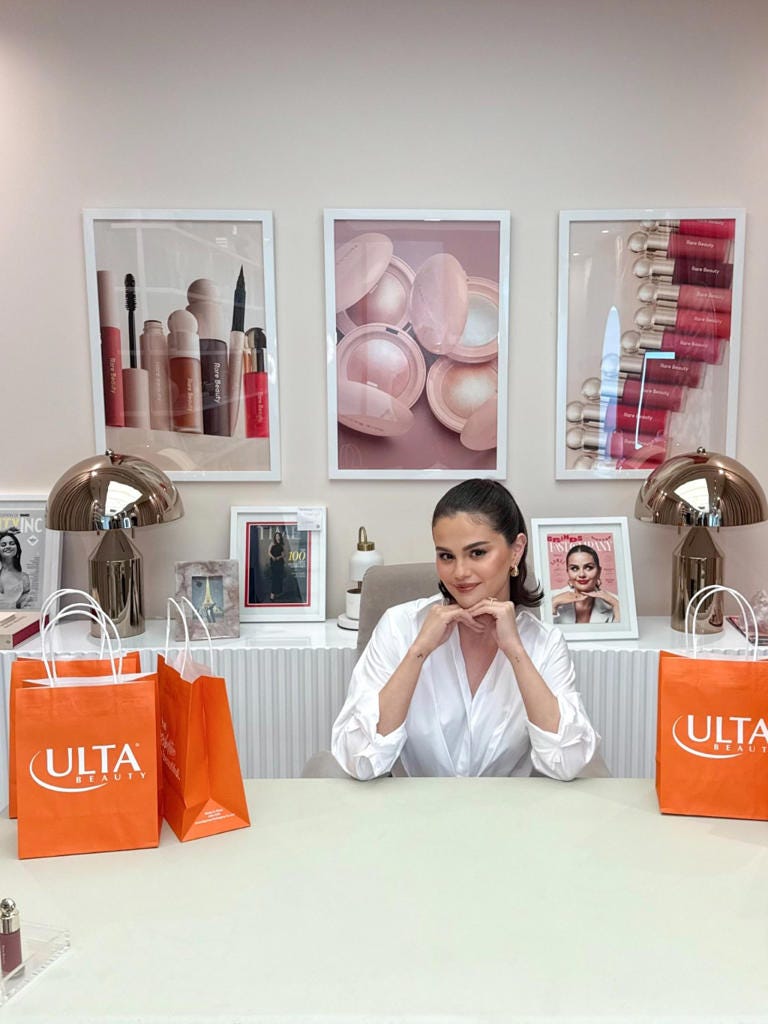
A few days ago, it was announced that Selena Gomez’s Rare Beauty ended their Sephora partnership, and is choosing to expand in 1,500 Ulta doors by February 1st, 2026. I think this captures that exact inflection point.
While I don’t pretend to understand the mind of an Ulta shopper as that store evokes a very specific overwhelm of me losing my mother as a child in the local neighborhood Caldor, I’m not delusional enough to think that prestige automatically equates to profitability.
I don’t think any brand builder who seriously wants to make any real money should dream about becoming the next Byredo right now.

Our relationship to entrepreneurship has changed for good (thank God)
For one, I’m glad walking away is becoming so popular.
The mechanics that once governed success (raise capital, scale methodically, build for institutional validation) are so over. We will see a wave of established brands continue to bow out, many of them fatigued from the unpredictability of a market that no longer rewards slow, strategic, predictive thinking.
The brand closures of 2025 can hardly be reduced to bad business decisions, which I think by now we collectively understand.
They reflect an entire shift in how attention is captured (discovery) and loyalty is won (incentive).
If the old playbook is dead and aspiration no longer drives purchase behavior as it once did, what does a winning strategy actually look like in 2026?
In the near future I see a few things:
